
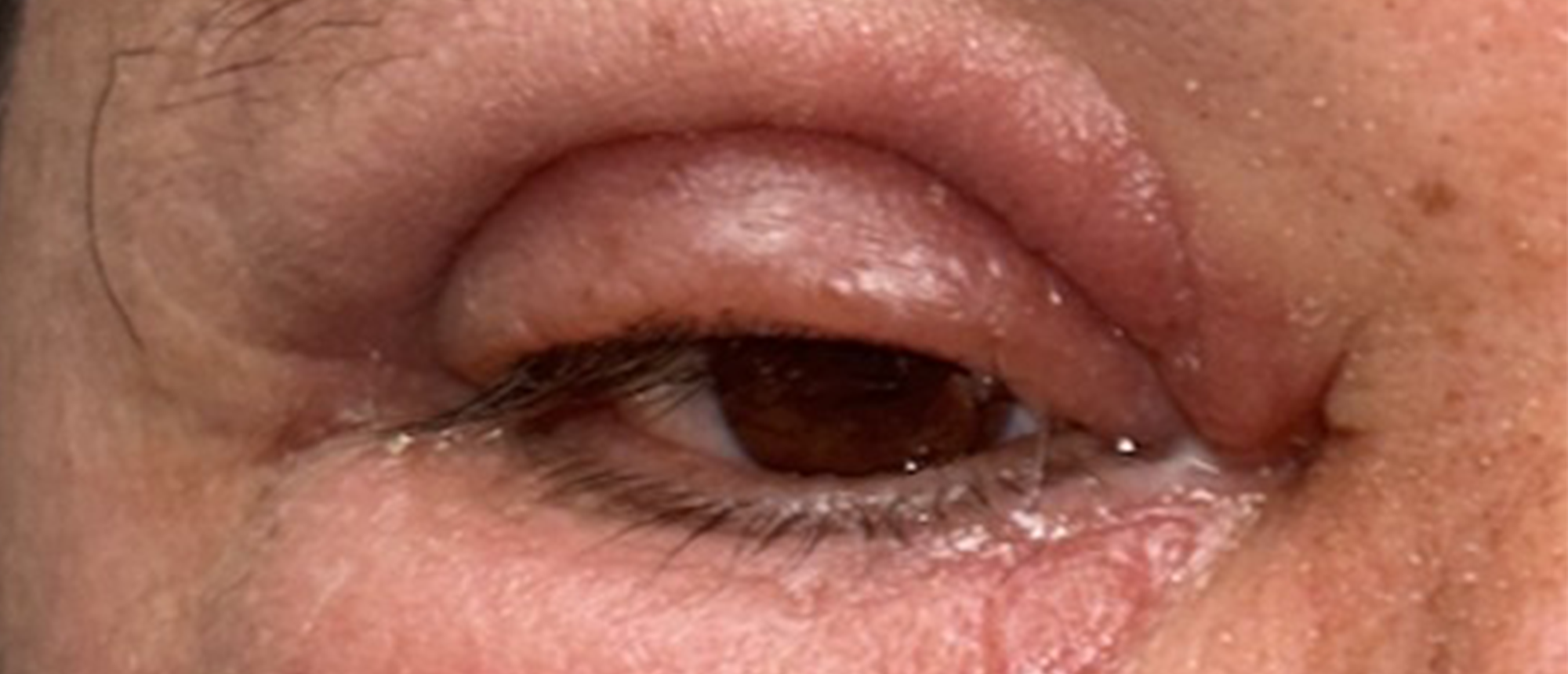
Periorbital Necrotizing Fasciitis
A patient presented with three days of progressive left upper eyelid swelling that resulted in ptosis, diffuse periorbital edema and erythema with areas of purulence. The patient denied pain or paresthesia. Symptoms began one week after emergency department repair of a scalp laceration sustained in a ground-level fall in which the patient struck his head on a dock and then fell into a marina. Initial CT of the orbits suggested left preseptal cellulitis extending to the paranasal and left zygomatic soft tissues without intraorbital extension, and broad-spectrum IV antibiotics were started. Over the following 48 to 72 hours, the patient spiked a fever despite broad-spectrum coverage, with only minimal reduction in swelling and worsening tissue friability. Blood cultures grew group A Streptococcus pyogenes. Repeat CT demonstrated progression of pre- and postseptal orbital cellulitis, a 3.8-cm left preseptal abscess without postseptal abscess, bilateral facial cellulitis, and a periapical abscess of the left first maxillary molar. Poor antibiotic response, systemic toxicity, and progressive tissue friability established the diagnosis of periorbital necrotizing fasciitis. Management included surgical debridement, placement of a fenestrated catheter with hypochlorous acid irrigation every 4 hours, adjunctive topical wound care, and antibiotics tailored to group A Streptococcus with clindamycin. Antibiotic-refractory "preseptal cellulitis" with systemic toxicity and progressive tissue friability should prompt urgent reconsideration of necrotizing fasciitis, with early surgical debridement and toxin-directed antibiotic therapy.
Presentation Date: 09/24/2026
Issue Date: 09/25/2026
Please log in or click on ENROLL ME to access this course.
