
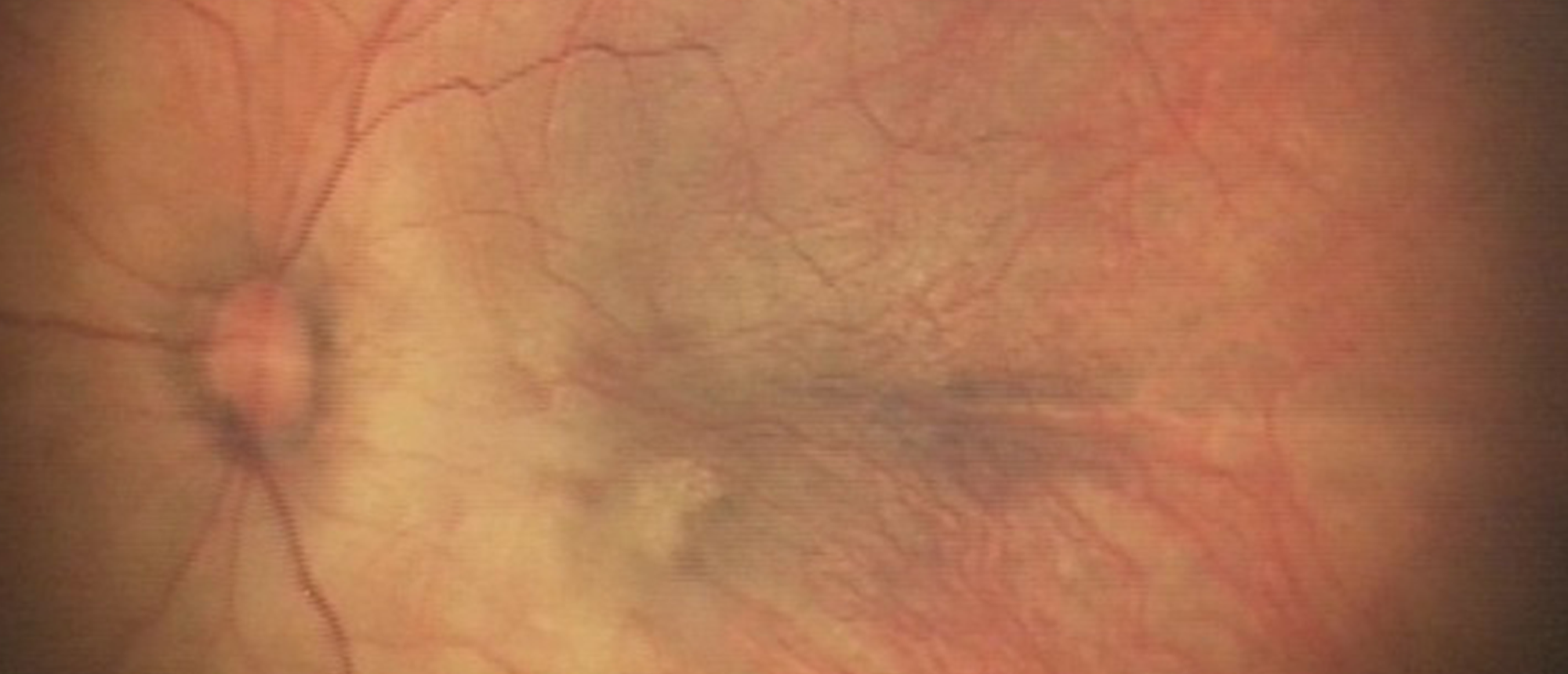
Knobloch Syndrome
A patient with congenital nystagmus, high myopia, and progressive visual impairment was referred for evaluation of abnormal eye movements and bilateral retinal abnormalities. Ophthalmic examination demonstrated marked myopia and vitreoretinal degeneration consistent with an inherited vitreoretinopathy. The clinical course was complicated by retinal pathology requiring scleral buckle placement with laser to avascular retina, followed by subsequent removal of the scleral buckle due to exposure years later. Multimodal retinal imaging, including fundus photography and optical coherence tomography, demonstrated persistent structural abnormalities of the posterior segment. Given the severity and early onset of the ocular phenotype, an underlying genetic disorder was suspected. Further review of the medical history and systemic findings provided additional clues to a syndromic diagnosis. Comprehensive inherited retinal disease genetic testing identified biallelic pathogenic variants in COL18A1, establishing the diagnosis of Knobloch syndrome. Management included treatment of the retinal complications, refractive optimization, continued vitreoretinal surveillance, and counseling regarding the lifelong risk of additional retinal tears and retinal detachment. Genetic counseling and multidisciplinary follow-up were recommended. This case illustrates the diagnostic challenge of Knobloch syndrome when ocular manifestations predominate and highlights the importance of considering an inherited vitreoretinal disorder in patients with congenital nystagmus, high myopia, and severe retinal disease. Recognition of this phenotype can direct appropriate genetic testing, clarify previously unexplained ocular and systemic findings, and guide long-term surveillance and management.
Presentation Date: 08/13/2026
Issue Date: 08/21/2026
Please log in or click on ENROLL ME to access this course.
