
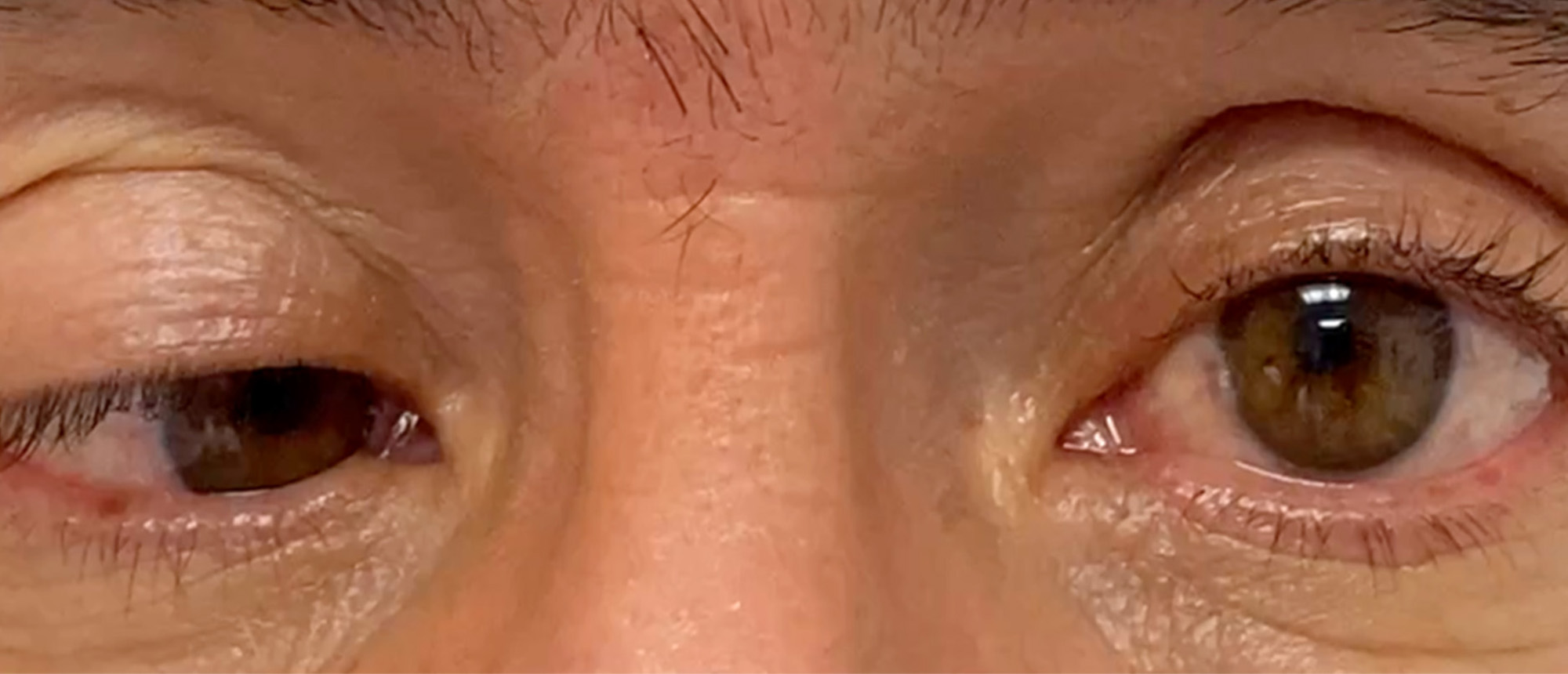
Combined 3rd and 6th Nerve Palsy Secondary to Cavernous Sinus Meningioma
A patient presented with painless strabismus and diplopia without vision changes in either eye. Prior to this presentation, he was diagnosed with combined 3rd and 6th cranial nerve palsy secondary to cavernous sinus meningioma and obstructive hydrocephalus 12 years ago. He had a ventriculoperitoneal (VP) shunt placed in 2014 for the obstructive hydrocephalus and VP shunt revision in 2016 due to decreased vision and worsening symptoms including loss of awareness of surroundings, garbled speech and severe depression. His tumor size was stable since 2013 without history of surgical intervention, radiation therapy or chemotherapy. He was lost to follow up for 6 years and later presented to ophthalmology for strabismus evaluation and treatment. He was diagnosed with a combined 3rd and 6th cranial nerve palsy with aberrant regeneration of the 3rd nerve. His clinical examination showed a large angle of esotropia and hypotropia of the right eye with significant limitation of supraduction, abduction and infraduction. Strabismus surgery was performed and the esotropia and hypotropia was significantly improved. After surgery, he had difficulty fusing image even with the help of prism glasses due to significant intorsion of the right eye. An overaction of the superior oblique muscle was identified and a second strabismus surgery (superior oblique tenotomy) was performed. The patient’s intorsion was improved, and he was able to fuse at primary gaze and down gaze with slight chin up positioning. The patient is currently being followed up in the clinic.
Presentation Date: 04/03/2025
Issue Date: 04/10/2026
Please log in or click on ENROLL ME to access this course.
